
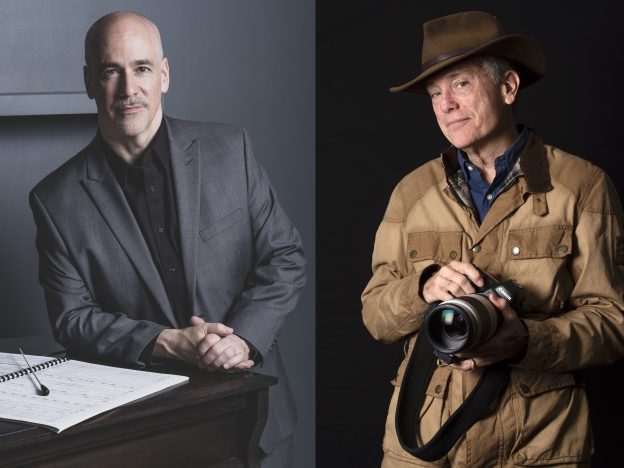
In recognition of America’s 250-year celebration, composer Peter Boyer and photographer Joe Sohm have created a multi-media work called American Mosaic, which is being performed across the country. They bring a wealth of creative talent and experience to the project, with Joe having more than one million published images over a career of forty years, and Peter composing a catalog of orchestral works which have received nearly one thousand live orchestral performances, and contributing orchestrations to many high-profile film projects. Local 47 talked with Peter and Joe to learn more about American Mosaic.
Local 47: How did the idea for American Mosaic originate?
Joe: I first met Peter in 2010 in Boston, when he was premiering his piece The Dream Lives On: A Portrait of the Kennedy Brothers with the Boston Pops. Over the following years, my wife and I would frequently hear his music on SiriusXM Symphony Hall during our RV trips. One day while listening to the radio, my wife said that Peter’s music sounds like my images. I started thinking the same. So, I sent Peter an email, and that was the beginning of our collaboration.
Peter: When I heard from Joe in 2023, he had a detailed collaboration proposal for America’s 250-year celebration. An interesting thing is that I had just signed a significant commissioning agreement for a separate project that also was related to America 250. It’s an enormous piece called A Hundred Years On, which is about the 1876 centennial exhibition in Philadelphia. I hadn’t written a single note yet, so I knew I had this other huge project that I was going to embark on.
And then Joe appeared on the horizon with his project idea for America 250. We got together for lunch, and he proposed that we work together. Joe wanted to build a new work made up largely of segments of pre-existing works of mine. The reason he wanted to do that was a practical one: create a video edited to a lot of my works, that would be in sections or chapters or movements. Another benefit was that this left me more time to work on the Philadelphia commission, making it possible for me to undertake both of these major projects.
Joe: Well, much of my work involves photographing the 50 states. More recently, I’ve evolved into shooting motion and time lapse and branching out into using drones. The result was cinema-quality 4K footage. I digested all four hours of Peter’s music he gave me, which is not only beautifully composed and orchestrated, but also exceptionally recorded. The more that I listened, the more it created imagery in my mind. Then I’d look at my work, and it would bring up music in my head.
Peter: Right. We both had a creative collaboration as we put this piece together over the course of about two years. From the beginning, I thought there would likely be a great deal of interest from the American orchestral community, and of course, Joe’s images are spectacular, and I felt like we were going to create something that was greater than the than the sum of its parts.
Local 47: Which orchestras are performing the work?
Peter: I’m pleased to say that it’s a remarkable consortium of co-commissioning orchestras, which are all AFM orchestras.
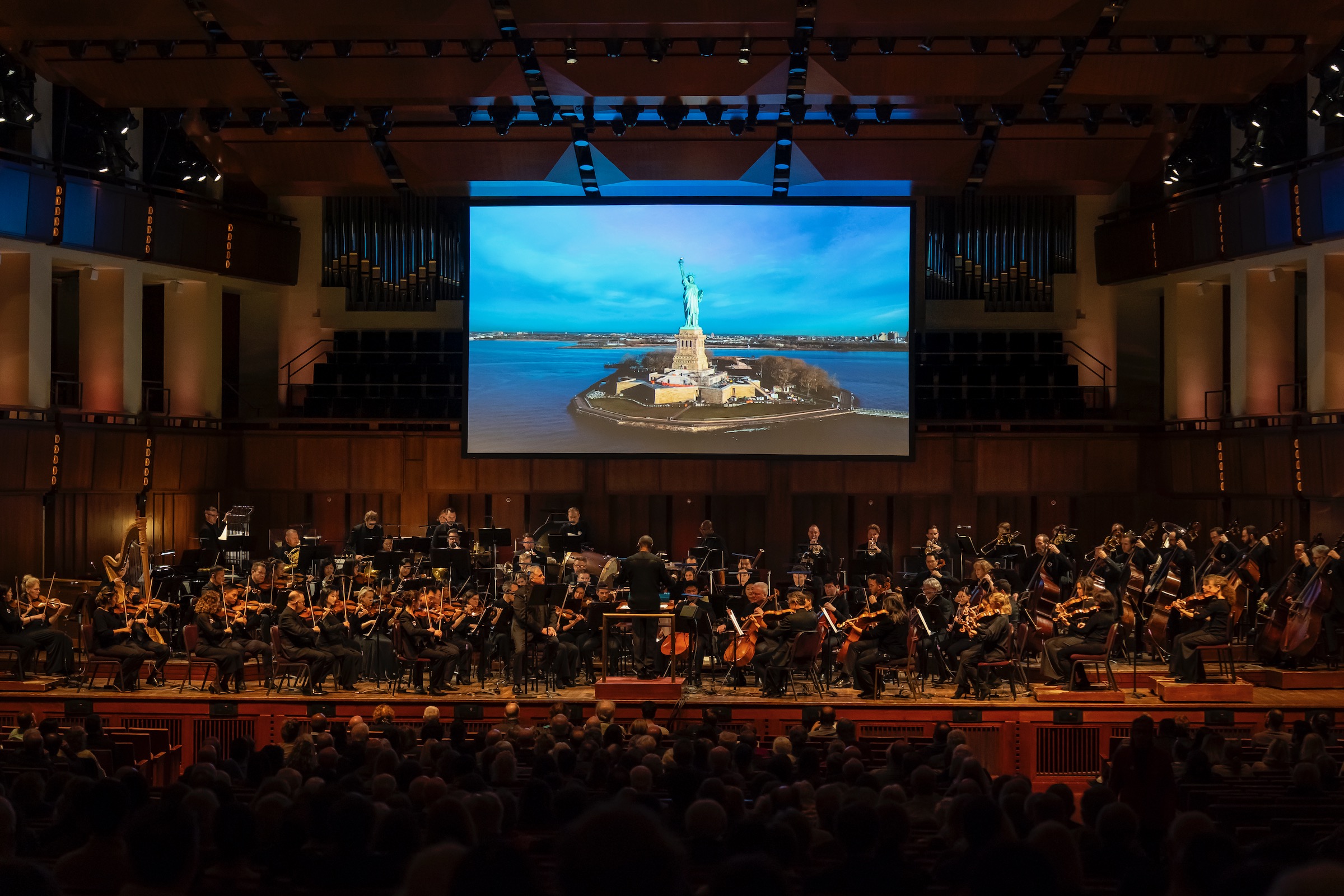
The lead orchestra is the National Symphony Orchestra (NSO). They premiered it in February at the Kennedy Center, with Thomas Wilkins conducting three performances very successfully.
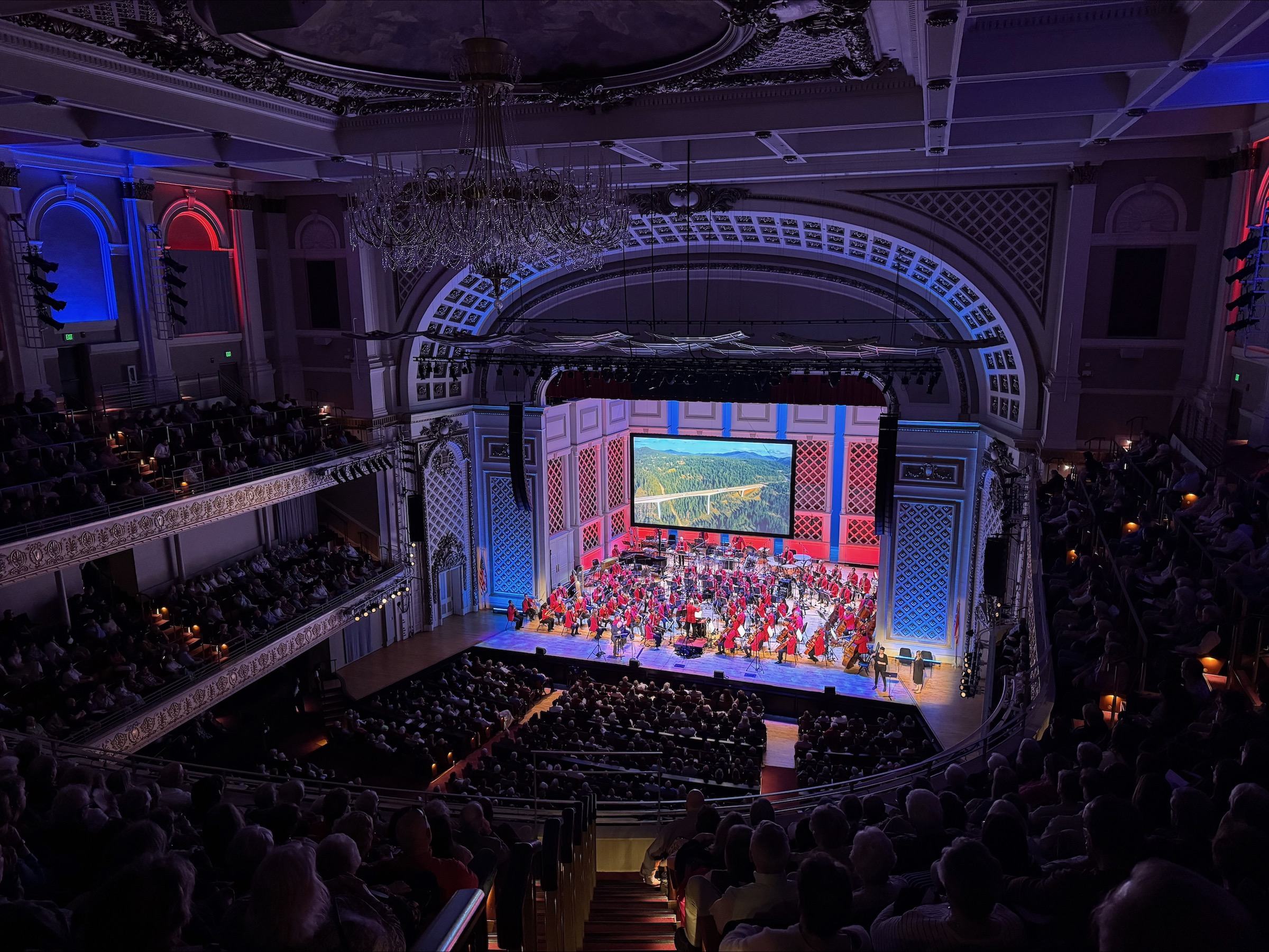
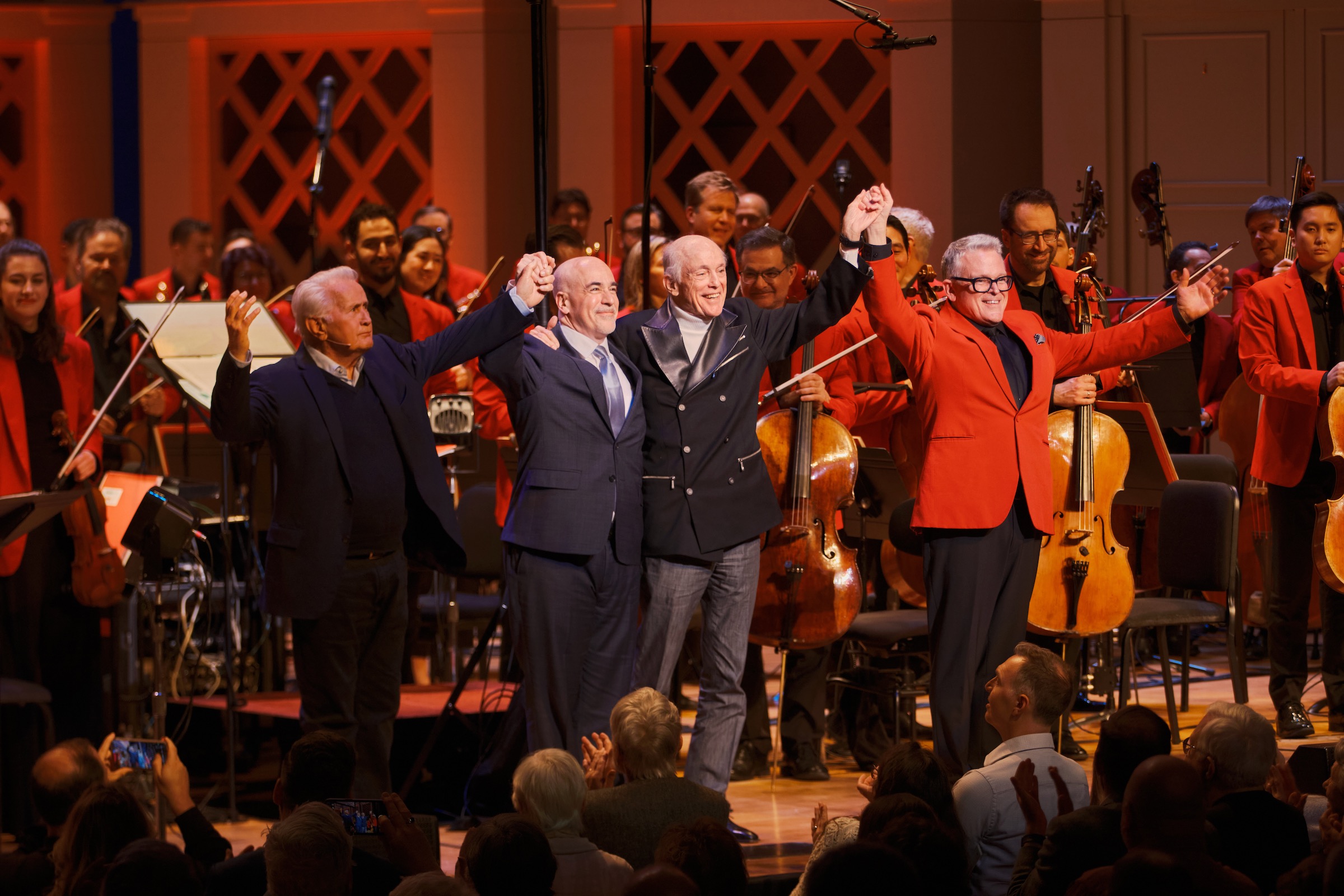
The second orchestra was the Cincinnati Symphony Orchestra, in its guise as the Cincinnati Pops. They did three performances in March, which were conducted by John Morris Russell and narrated by Martin Sheen.
Next was the Williamsburg Symphony in Virginia, which gave three performances in early May that were conducted by Michael Butterman and narrated by actor Barry Bostwick, and another in Yorktown.
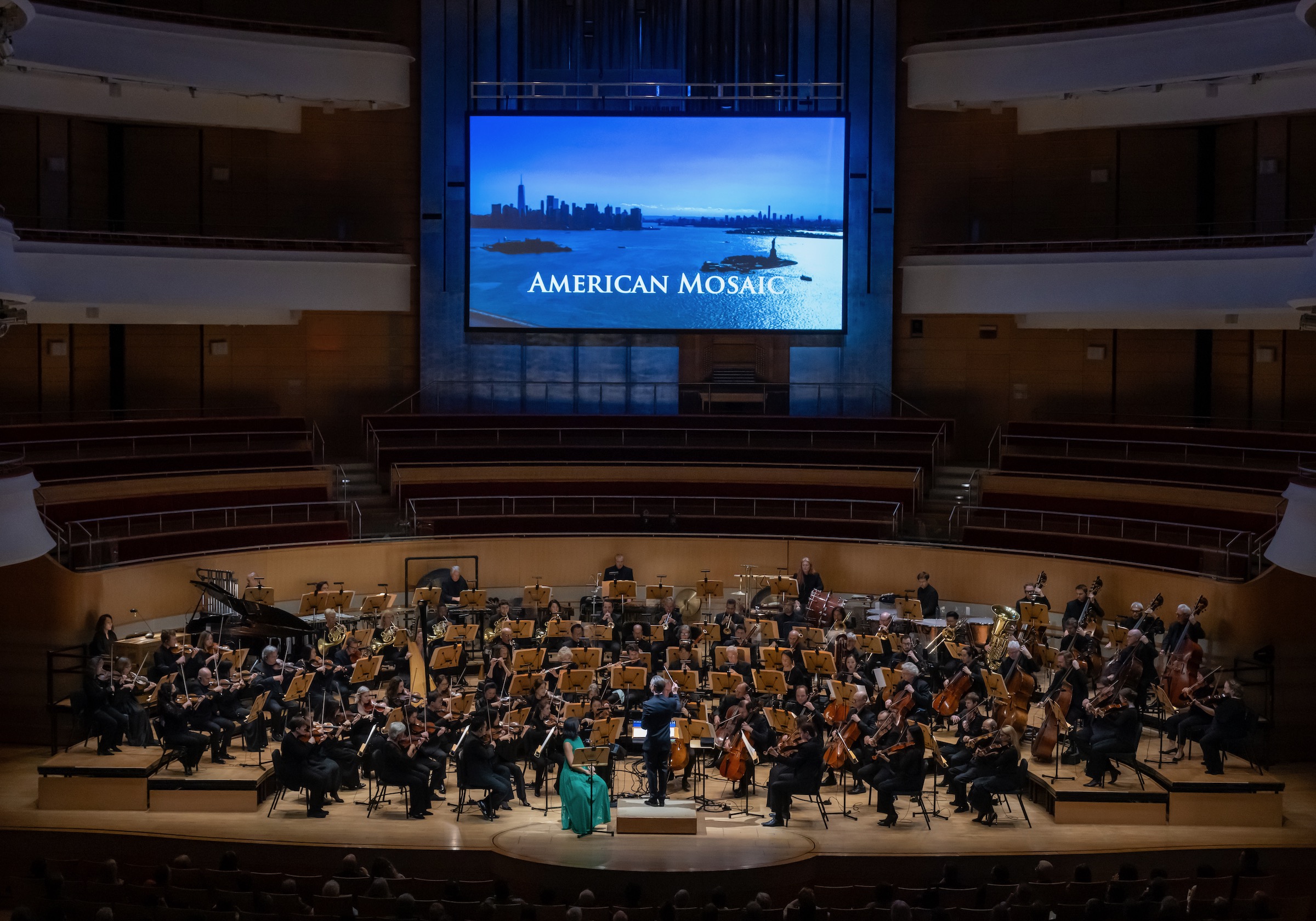
The fourth orchestra to perform the work is the Pacific Symphony, which of course has quite a few local 47 members in it. The orchestra gave three performances in May, conducted by Alexander Shelley.
The Detroit Symphony Orchestra will perform the work four times, from July 2 to July 5, at the Henry Ford Museum of American Innovation, conducted by Jader Bignamini.
The Des Moines Symphony will perform selections from American Mosaic at their huge July 3 concert for tens of thousands of people at the Iowa State Capitol. And they’re going to do the complete piece in their regular concert hall in September.
In addition to the co-commissioning consortium, the great St. Louis Symphony is going to perform the work this November. And the NSO’s music director, Gianandrea Noseda, an internationally renowned conductor, is going to conduct the piece at Wolf Trap on August 15.
Finally, the Nashville Symphony just announced their September 5 performance, with Leonard Slatkin conducting, and Gary Sinise narrating. So, when you put all this together, it’s a total, thus far, of eight orchestras, and 24 live performances. Joe and I are proud to see all the interest that has grown in the project.
Local 47: Are there any plans for recording American Mosaic?
Peter: Yes! We will be recording the work at the Sony Scoring Stage on July 30. Peter Rotter is contracting, and Shawn Murphy will be engineering and mixing. It will be very exciting for us to record this with some of LA’s finest musicians, and I look forward to conducting.
We also recorded the narration with Martin Sheen a couple weeks ago for the forthcoming short film version of American Mosaic, which is also very exciting.
Local 47: Can you tell us a little about the music in the piece?
Peter: The work is orchestral, with spoken narration, and I think there’s a certain cinematic storytelling quality to it. Broadly speaking, the two kinds of music that that are included in it are a very rhythmic, propulsive kind of music on the one hand, and then a lyrical, melodic kind of music on the other. The combination of the imagery and the power of an orchestra can have this great narrative quality.
And there is also a script that is based on selected quotes from American history. The concert piece is 33 minutes, composed of 11 sections or movements. And in each one of these, there is a narration that is based around one or more quotes. Our collaboration on the script was not writing it all from scratch, but figuring out which quotes we would use, where we would assign those quotes, and then what the context would be around them.
We have sections on agriculture, transportation, military service, and so on. One section called “Cities Arising” has a Walt Whitman quote, in which he rhapsodizes, as he tended to do, about all these qualities of cities, and lo and behold, that worked extremely well. Joe has endless city shots, and we decided that was the one segment where we would caption it—because everybody recognizes New York, everybody recognizes probably Los Angeles, but when you get to a lot of other cities, not everybody is going to recognize them unless you’re from those cities. So, there are about 40 cities that appear very quickly in this three-minute section, and that really works well, with a lot of impact.
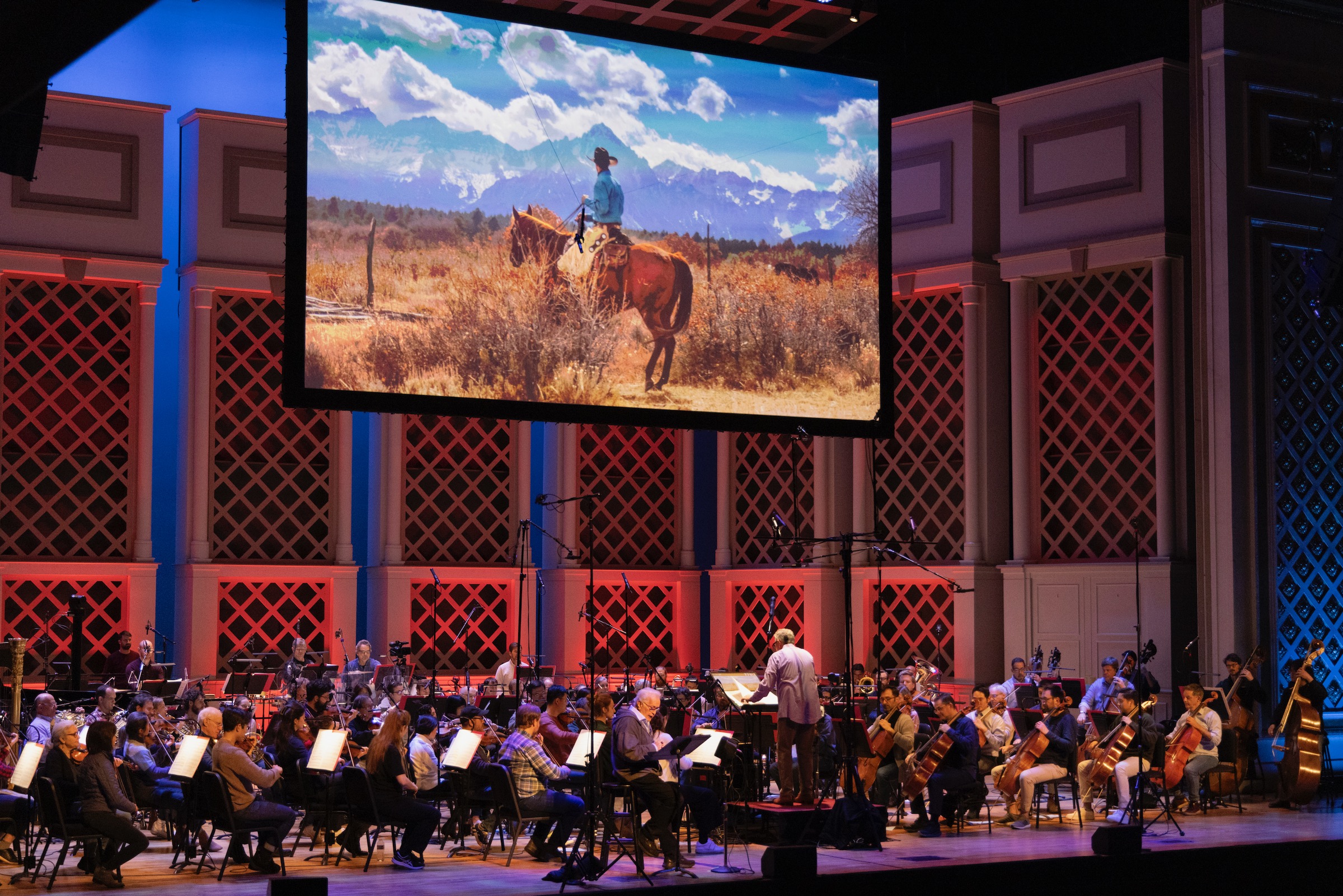
Joe: One of the things I would add is that we have kind of a reverse architecture, where normally if it were a film, it would start with a script, then it would go into film production, and then finally at the last minute they would give Peter a call to write an entire score. As I mentioned earlier, the way we constructed this was for me to listen to Peter’s music first, and select pieces that fit into my categories that became sections. And then from that, we went to phase three, where we reverse engineered getting to words, via historical quotes first, and then the copy that has been read by our various narrators. It’s almost like building a house from the roof down, instead of from the ground up. In some ways, I think this approach has given the work a rather integrated, very tight feeling.
Peter: A big part of my creative process and challenge was knowing that the piece was largely going to consist of multiple pre-existing pieces, or excerpts from pieces. I said to Joe from early on that this must have the right balance between fast, driving, propulsive, exciting music and lyrical, contemplative, melodic music. We wanted to have enough of both, and in the right proportions. That would affect the order of the sections. We didn’t want to exhaust the audience with endless rhythmic, propulsive music, but we also didn’t want to put them to sleep with too much lyrical music.
I think that we ultimately found the right balance. When you put all the elements together – the power of orchestral music, Joe’s breathtaking images, and the captivating narration – the end result is very powerful for audiences, and presents what we believe is an impactful and unique take on America’s 250-year celebration.