A conversation with Kadima Conservatory founder Beth Elliott
by Linda A. Rapka
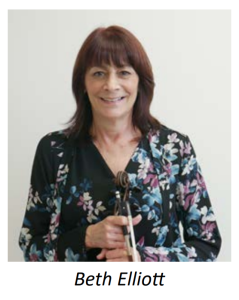
Since founding the Kadima Conservatory of Music in 1983, AFM Local 47 member Beth Elliott has been active as its music director, dedicated to providing music education to underprivileged youth from underrepresented communities. The Conservatory has been operating in Pacoima for over a decade and has over 300 students of all ages enrolled in private lessons, three symphonic orchestras, chamber music, student recitals, and a mentoring program.
However, their efforts have been severely impacted by widespread operations of the U.S. Immigration and Customs Enforcement (ICE) raids, which continue to threaten our immigrant communities.
“In normal times, parents are lined up 60 deep to sign up their kids for these programs that we’re doing,” Elliott said. “You know, criminals don’t do that. These are mommies and daddies who are trying to make a better life for their child by giving them violin, viola or cello lessons.” But once the Trump administration’s aggressive deportation policies began taking effect, many parents have not felt safe enough to attend concerts or even to take their children to lessons, forcing many students to drop out.
“We had a concert right after the ICE stuff started happening, and they didn’t come – they were afraid,” Elliott explained, noting that the fear of being detained and deported is a very real concern that continues to impact not only the children’s musical education, but also is preventing many parents from being able to work and provide for their families. “That’s just heartbreaking.”
“We got really nervous because [ICE agents] were actually going into schools. When all this went down, we sent out information to my whole population in English and Spanish about what to do, what the procedure is. I got trained on what to do.”
The programs offered at Kadima have made a significant impact on the lives of our students, and many graduates have gone on to pursue higher education, including winning scholarships to prestigious institutions. Yet for those who can no longer attend, or who are afraid to apply for fears of exposure to ICE, Elliott says it’s devastating that these opportunities are being lost to so many.
“It’s been pretty disheartening,” she said. “I have a young lady who can’t get to orchestra because they just can’t get her there. It kills me.” She shared the story of an 11-year-old girl who is co-concertmaster of the junior philharmonic on a full scholarship. The mom works and dad was bringing her to practice and performances. “All of a sudden, she can’t come to her lesson, except for certain times when mom can bring her, because dad’s not going out” for fear of getting kidnapped by ICE. “It makes me sad when my student talks to me and she’s very worried about what’s going on, and that her dad can’t leave,” Elliott said. “It’s like, I don’t want to talk to a kid about this. I don’t want them to be scared. I want to talk to them about vibrato, you know?”
Elliott described having to find safe ways to get her students to their lessons when parents are unavailable, and when public transportation is risky. “This summer I had quite a few private-lesson Hispanic/ Latino kids in my studio and I did not want them on the bus,” she said. Because they were traveling from high-targeted areas in North Valley to Sherman Oaks, she would felt they were “walking targets” and instead send them on private ride-share services. “It just becomes ridiculous that a person can’t come take their fiddle lesson because they won’t be able to get there because their parents are laying low.”
In response to these incidents, Kadima has had to adjust certain practices to ensure the safety of their students and their families. Before the ICE raids began, during rehearsals and concerts they would always keep the theater door open so that the orchestra musicians could freely walk in and out. Now that sense of freedom is gone, and protocols for the last performance changed. “Instead what we did is have a parent sit there and close the doors,” Elliott said. “There were just so many kids in there whose parents were at risk, or were possibly at risk.”
ICE raids are not the only challenge currently impacting Kadima. Elliott shared that due to slashed public funding, they’ve lost $45,000 in grants due to recent National Endowment of the Arts cuts. “This is affecting everything.”
Music education is essential for our communities by providing a platform for self-expression, creativity, and cultural enrichment. It can also serve as a safe space during difficult and scary times. “You just open your doors and you do the right thing,” Elliott said. “It’s part of a greater picture we’re trying to paint.”
She shares that Kadima remains steadfastly committed to providing a safe and supportive environment for students and staff, and that they recognize the importance of music in bringing people together and promoting social cohesion. “The world’s so bizarre right now, some genuine string music is just so needed.”
Kadima is currently exploring long-term solutions to address these unique challenges by looking into alternative funding sources to ensure the sustainability of these essential programs and continue providing music education to underprivileged youth.
“I get sad sometimes, but also what keeps me motivated is the work we’re doing,” Elliott said. “And the music.”
To learn more about Kadima Conservatory and discover ways you can support their programs, please visit kadimaconservatory.com.
